
Here's a pattern that repeats at nearly every corporate headshot session: the employee who was most reluctant to sign up is the one who stays an extra minute to say they actually enjoyed it.
Camera anxiety is real. Studies show a meaningful portion of employees will quietly avoid scheduling rather than openly say they're uncomfortable on camera. That reluctance usually disappears within the first 60 seconds of a session - but the organizer has no way of knowing that in advance. All they know is that they've been asked to coordinate a company photo day and they have no idea what that actually involves.
This is what it actually involves.
Your Job as the Organizer Is Smaller Than You Think
Most office managers and HR directors assume coordinating a headshot day means a lot of herding. It doesn't - at least not when you work with a photographer who handles logistics as part of the job.
Here's what you need to do: confirm the date, share the team size, and give us a point of contact. That's the bulk of it. Everything downstream - the schedule, the reminders, the wardrobe guidance, the setup, the coaching, the delivery - gets handled from there.
Pittsburgh companies from Downtown law firms to South Hills healthcare practices to North Shore tech companies have gone through this process. The most common thing organizers say after: "That was way less work than I expected."
Before Session Day: What We Send Your Team
A week or so before the session, everyone on the schedule receives a wardrobe guide. It's specific - not just "wear something professional." We give recommendations based on your industry, because what reads well on camera at a financial advisory firm is different from what works at an engineering company or a healthcare practice.
The basics hold across the board: solid colors photograph better than patterns for a team, mid-tone colors (navy, charcoal, burgundy, forest green) work well, and a crisp white shirt is a great choice, especially under a jacket. If anything in someone's wardrobe needs a tweak, we flag it ahead of time.
Each person also gets their appointment time in advance. No one has to linger or wait around - they show up at their slot, get great photos, and are back at their desk in about 10 minutes.
What Session Day Looks Like
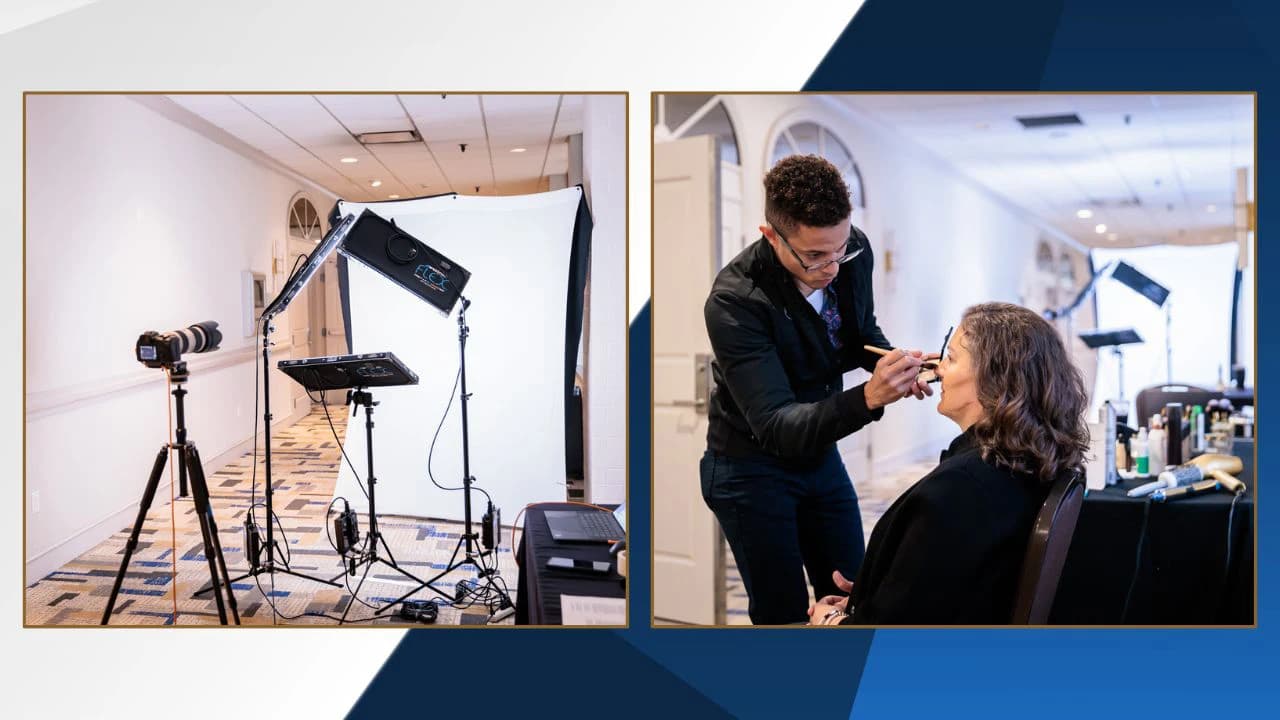
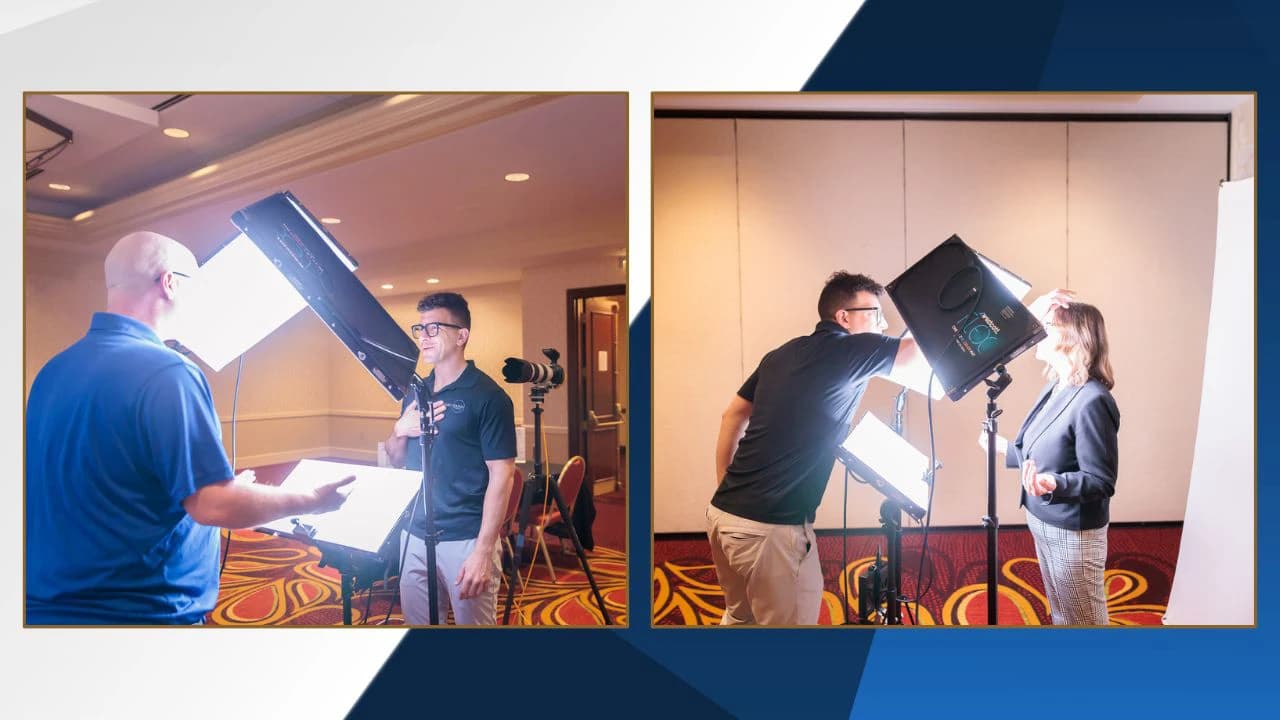
We arrive early. Setup takes roughly 30 minutes and includes professional studio lighting, backdrop, tethered monitor, lint roller, and a mirror. Everything comes with us - your team doesn't need to prepare anything or rearrange the space.
A typical session day for a 20-person team looks something like this:
- 8:00 AM - We arrive and set up in your conference room
- 8:30 AM - First person comes in for their appointment
- 8:40 AM - Second person comes in. And so on, every 10 minutes.
- 11:50 AM - Last person wraps up
- 12:15 PM - We've broken down and are out of your space
Your employees lose about 10-15 minutes of their day total. Nobody misses a meeting. Nobody takes a long lunch. The disruption to the workday is genuinely minimal.
What Your Employees Actually Experience
Walking into a headshot session for the first time, most people don't know what to do with their face, their hands, or their posture. That's not a problem - it's the job of the photographer to handle all of that.
With over 600 five-star Google reviews and thousands of Pittsburgh professionals photographed, we've worked with every version of camera reluctance. The quiet person who hasn't had a photo taken in years. The executive who's been told to "just look natural" and has no idea what that means. The employee who walked in visibly nervous and was laughing within two minutes.
Every session starts with a quick conversation: where will this photo be used? LinkedIn? The company website? Conference materials? That context shapes everything - the expression, the feel, the energy of the image.
From there, everything is coached. Chin position, shoulder angle, how to hold your jaw to look relaxed rather than stiff, what to think about to get a genuine expression instead of a forced smile. Most people are surprised to discover that a great headshot isn't really about holding a pose - it's about a specific moment that the photographer creates the conditions for.
The tethered monitor changes the dynamic entirely. Because every image appears on a large screen in real time, the session becomes collaborative. Employees see what's working, we adjust, and then - before they leave - we do a quality control review together. We go through the shots and confirm you're happy with what you have. The anxiety of "I won't know if I look good until it's too late to do anything" is completely removed.
After the Session: Retouching and Delivery
Fully retouched images are delivered within 7 days. Every photo receives professional color correction, skin retouching that looks natural rather than overdone, and removal of any temporary blemishes. Files come in high-resolution formats sized for both digital and print use, delivered to a private online gallery your whole team can access.
For conference and event sessions, same-day delivery is an option - attendees can update their LinkedIn profile before they leave the building.
The retouching philosophy matters. We're not smoothing faces into something unrecognizable. We're removing the things that weren't there last week - the blemish, the dark circle from a bad night of sleep - while keeping everything that makes someone look like themselves. The goal is for people to look at the photo and think "that's me on a really good day," not "who is that."
Why Pittsburgh Companies Keep Calling Back
The practical case for professional headshots is well-documented. LinkedIn profiles with professional photos receive significantly more views and recruiter outreach than those without. When your whole team has consistent, polished photos, your company's digital presence looks cohesive rather than assembled from different eras and different phones.
But the reason companies call back - and they do - is simpler than that. It's because the experience for both the organizer and the employees was easier than anticipated. The person who set it up didn't spend the day managing chaos. The employees who were nervous didn't have a reason to be. And the photos look like the company you want people to think you are.