
Booking the session is the easy part. Then you open your closet and freeze - because you know the headshot is going on your LinkedIn, your company's team page, and every speaker bio for the next few years, and you have no idea what to actually wear. Here is the good news: what you wear is the single biggest thing you control on shoot day, and the rules are simpler than they look.
After four years of headshot sessions in Pittsburgh, I've watched the same wardrobe questions come up again and again, and almost all of them come back to a few basics: fit, simple colors, one good layer, and dressing a notch above your normal workday. This is the full guide - by industry, for men and women, glasses and jewelry included, and a clear list of what to leave on the hanger.
The One Rule That Beats the Rest: Fit
If you remember nothing else, remember this: fit beats everything. A perfectly chosen color in a shirt that bunches at the shoulders or billows at the waist will always lose to a slightly off color in something tailored to you.
Headshots crop tight - usually mid-chest and up - so every wrinkle, gap, and extra inch of fabric is right next to your face where the camera can't ignore it. Clothing that skims your frame reads as sharp and intentional. Clothing that's a size too big reads as heavier and less put-together, even when nothing else is wrong. Before your session, actually try things on and check the shoulders, the collar, and how the fabric sits when you're seated with your arms relaxed. If a jacket pulls or a collar flares, that's the one to fix first.
Get it tailored, or size down. A ten-dollar tailor tuck on a blazer or a shirt that fits your shoulders will do more for your headshot than any color choice. When choosing between two tops, pick the one that fits better - every time.
Best Colors, in Brief
Color matters, but it's the second decision, not the first. The short version: wear solid, muted colors that flatter your complexion and don't fight your face for attention. Deep blues and greens, navy, charcoal, and soft neutrals are safe and versatile for almost everyone. Jewel tones - sapphire, emerald, burgundy - photograph beautifully if you want a little more richness. And don't be afraid to go bold: bringing one bright, saturated color or a standout piece adds personality and gives your gallery real range - a pop of color is a good thing, not a risk. The only color to genuinely steer clear of is true neon, which casts a colored glow onto your skin, along with the extremes of stark white or pure black, which can blow out or flatten depending on the lighting.
Because color is worth getting right, and because the best shade genuinely depends on your skin tone and industry, we cover it in real depth in a separate piece. If you're weighing specific colors, read our full guide to the best colors to wear for professional headshots - then come back here for everything else.
Necklines, Patterns & Fabrics That Photograph Well
Once fit and color are handled, the details do the rest.
Necklines. Keep them clean and simple. Crew necks, V-necks, scoop necks, and collared shirts all frame the face well. Very low or very busy necklines pull the eye away from your expression, and anything too tight at the throat can look stiff. Keep in mind that we crop in close on our headshots, so a neckline that sits too low can end up below the frame entirely - and a very wide neckline sometimes disappears under a jacket, which leaves you looking bare at the collar. If you're layering, make sure the neckline underneath plays nicely with the jacket or sweater over it.
Patterns. Solids are the safest bet, and for corporate or team headshots they're the rule. For an individual session, a pattern can work. If you love a pattern, go for a larger, lower-contrast one. The thing to avoid is tight, high-contrast repetition - narrow stripes, small gingham checks, fine herringbone. Those can create a shimmering moire effect on camera that's distracting and hard to retouch out. Big bold prints have the opposite problem: they compete with your face. A subtle texture reads as interesting; a loud pattern reads as noise. All that said - if patterns are genuinely your thing, wear them. We want your headshot to look authentically like you, not like a checklist of rules.
Fabrics. Matte fabrics photograph cleaner than shiny ones. Cotton, wool, ponte, and quality knits sit well and hold their shape. Very shiny satin or synthetic sheen catches studio light and creates hot spots, the same way glossy hair products do. And press everything - wrinkles that you'd never notice in a mirror are obvious at headshot resolution.
Add a Layer: Structure Gives You Depth
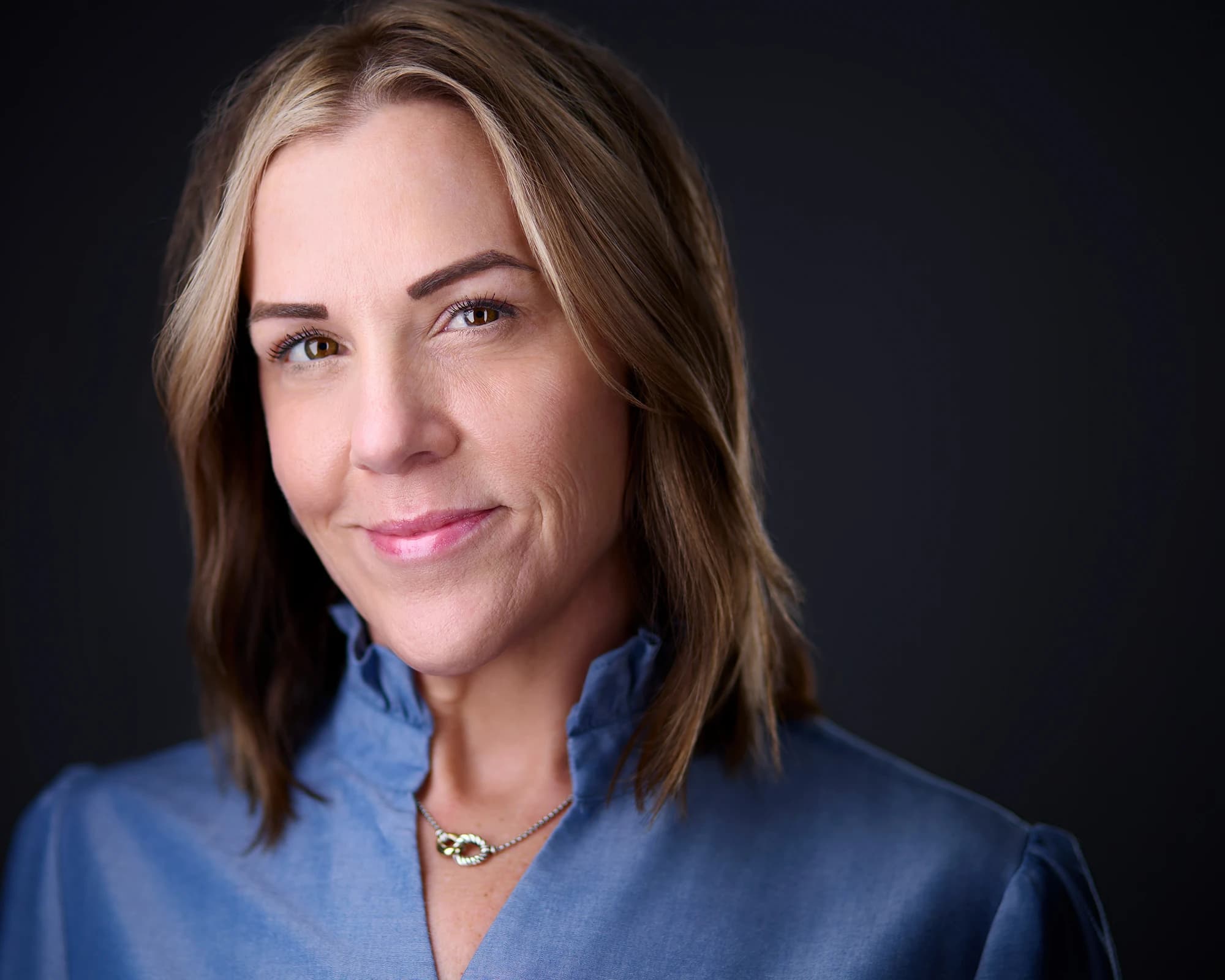
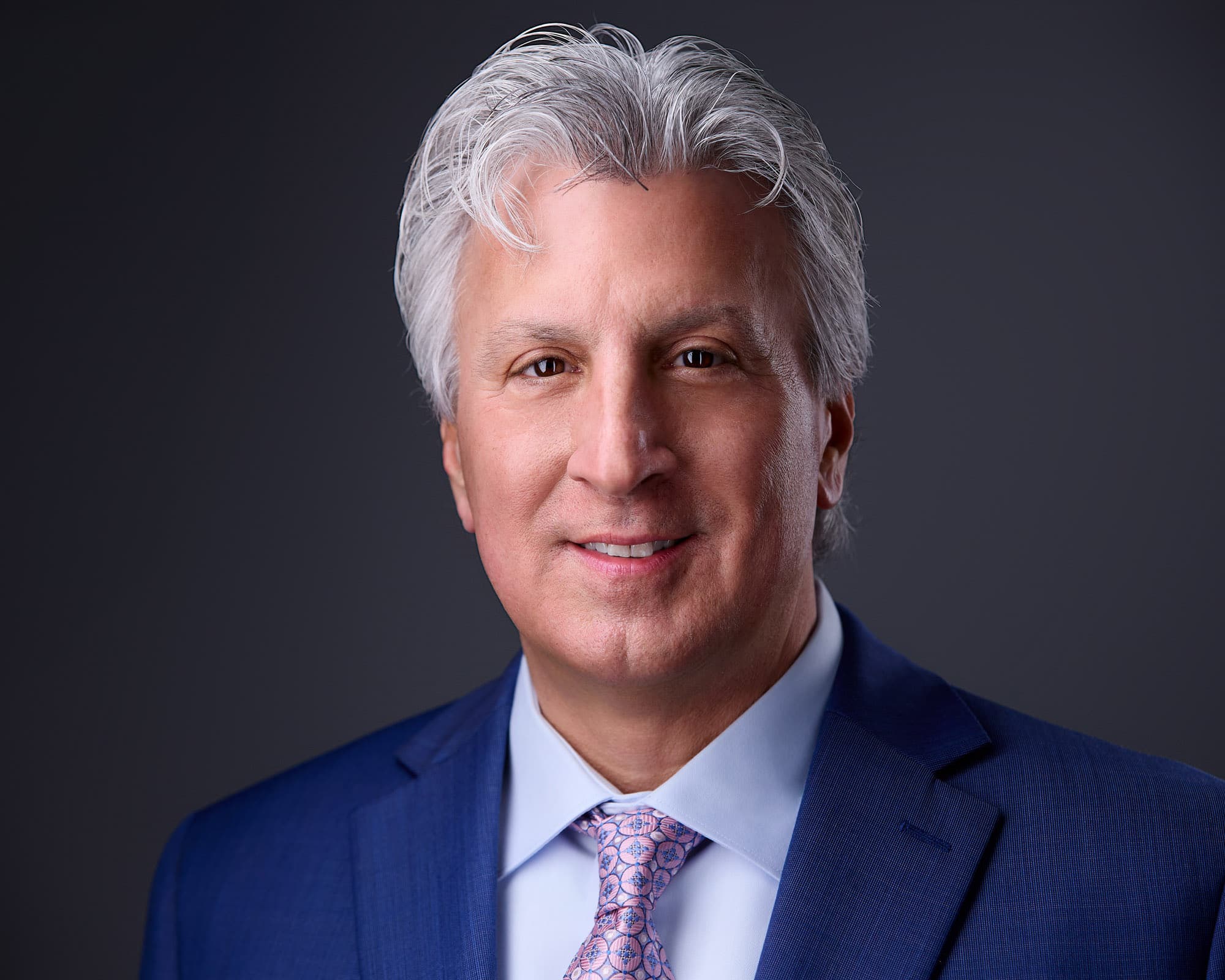
One of the easiest upgrades to any headshot is a layer. A blazer, a structured cardigan, a quality knit, or a jacket over a simpler top adds dimension, defines your shoulders, and instantly reads more polished than a single flat layer.
Layers also give us options in one outfit. Jacket on for the formal version, jacket off for something more approachable, collar in or out - that's three distinct looks from one setup. A collared shirt under a blazer is the workhorse combination for corporate and executive shots because it looks modern and intentional without trying too hard. Ties are optional in most industries now; wear one if it's genuinely part of how you present at work, skip it if it isn't.
What to Wear for Business & Corporate Headshots
Corporate headshots reward a slightly more conservative palette and clean structure. The goal is to look competent, trustworthy, and current.
- Finance, banking, and law: Navy is the default and you truly can't go wrong with it. Charcoal gray is the runner-up. A crisp white or light-blue dress shirt under a well-fitted blazer is the executive standard. This is also the one field where ties still read as appropriate, so bring a few tie options to the session. Lean traditional here - it's a trust signal that maps to the field.
- Tech and startups: More flexibility. A quality button-down, a smart knit, or a quarter-zip over a clean tee works for team pages. Solid jewel tones signal modernity without being loud.
- Healthcare: Clean and approachable - soft blues, cool neutrals, and white shirts under a navy layer read as capable but warm.
- Real estate, sales, and consulting: Approachable-professional. A blazer over an open collar, or a polished knit, balances authority with the friendliness those roles depend on.
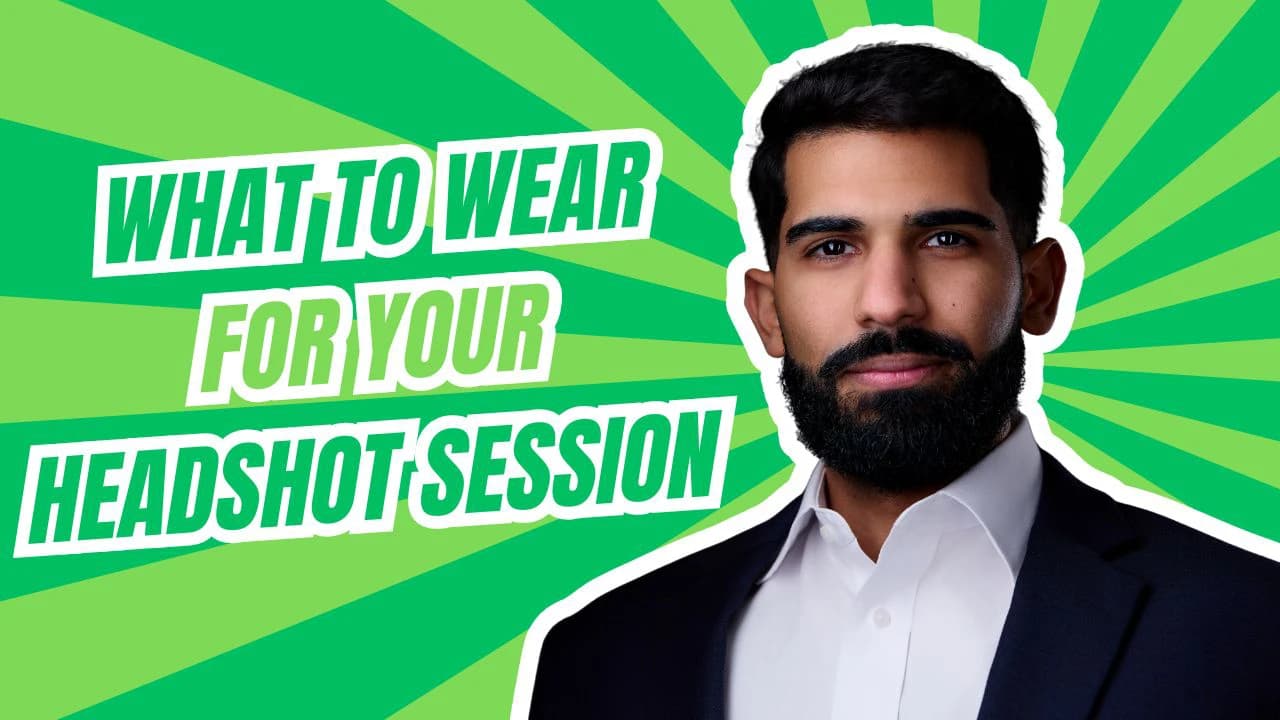
Here's the formality ladder I come back to again and again for jacket-and-shirt combinations. The most formal is a black jacket with a white shirt, then a black jacket with a blue shirt. My personal favorite sits right next on the ladder - a blue jacket with a white shirt - followed by a blue jacket with a blue shirt. All four are boardroom-appropriate; just pick the rung that matches how formal you want to read.
Across every industry, dress one notch above what you'd wear to an important client meeting. That's almost always the sweet spot.
What to Wear for Acting & Creative Headshots
Acting and creative headshots play by slightly different rules, because the job is to look like you, castable and current, not corporate.
Keep it simple and form-fitted. Solid colors in soft jewel or earth tones keep the focus squarely on your face, your eyes, and your expression - which is the entire point of an actor's headshot. Bring a couple of different necklines and a light layer so we can shift between a warmer commercial look and a more grounded theatrical one. Avoid logos, busy prints, heavy jewelry, and anything costume-like unless you're deliberately shooting to a specific type.
A plain black tee and a plain white tee are must-brings for actor sessions - but not a Hanes or Fruit of the Loom undershirt. It needs to be a well-designed, well-fitted tee that looks intentional on camera, not like something you'd wear under a dress shirt. Beyond the basics, bring clothing for the roles you're actually trying to book: dress toward the parts you read for, whether that's a grounded, dramatic look or a bright, friendly commercial one.
For creative professionals - designers, agency folks, founders - a bit more personality is welcome: interesting texture, a considered color, a well-cut jacket. Expressive, not distracting.
What to Wear: Men
The formula for men is refreshingly short.
- Start with fit. A shirt that fits your shoulders and neck does most of the work. If the collar gaps or the shoulder seam hangs past your shoulder, size down or get it tailored.
- Build around a collared shirt. A well-fitted button-down in white, light blue, or a soft solid is the backbone. Add a blazer or a fine-gauge knit for structure.
- Don't let an undershirt show. A tee poking out at the collar of a dress shirt reads casual and undercuts an otherwise sharp look. If you wear one, make sure it stays hidden.
- Mind the details. Trim and tidy facial hair a day or two out, not the morning of. Skip novelty gimmicks like cartoon ties, but a genuinely bold shirt or color is welcome. Keep fabrics matte - no shiny synthetic sheen.
- Casual is fine when it's real. For tech and creative roles, a quality solid tee or henley under a jacket looks natural. Just make sure it's clean, pressed, and fits close.
For a deeper walk-through, see our headshot tips for men.
What to Wear: Women
Women have more range, which is freeing and occasionally overwhelming. A few anchors make it simple.
- Fit and neckline first. A tailored blouse or top in a flattering neckline - V-neck, scoop, or a clean collar - photographs beautifully. Avoid sleeves that fan out wide or poofy, puffed shoulders that add bulk, since the crop sits right there. Go easy on sleeveless tops for your primary look too - bare shoulders can read a little too casual for a lead headshot, though they're a great option to bring for a secondary or tertiary shot.
- Solids and soft texture. A solid top in a color you love, layered under a blazer or structured cardigan, is endlessly reliable. Subtle texture is welcome, and a pattern you love can work for an individual session; for corporate or team headshots, stick with solids.
- Casual looks work too. A smart knit or a quality solid top reads polished without a jacket - great for approachable, team-page, or creative shots. The rules don't change: fit it well, keep it simple.
- Any size, same principles. Well-fitted and comfortable always wins. Structured layers that skim rather than cling, defined necklines, and colors you feel confident in flatter every body - don't hide in something oversized, and don't squeeze into something a size small. The one that fits now is the right one.
- Keep the eye on your face. Minimal, non-distracting jewelry and simple necklines keep attention where it belongs.
Our headshot tips for women go further on necklines, layering, and day-of details.

Glasses, Jewelry & Accessories
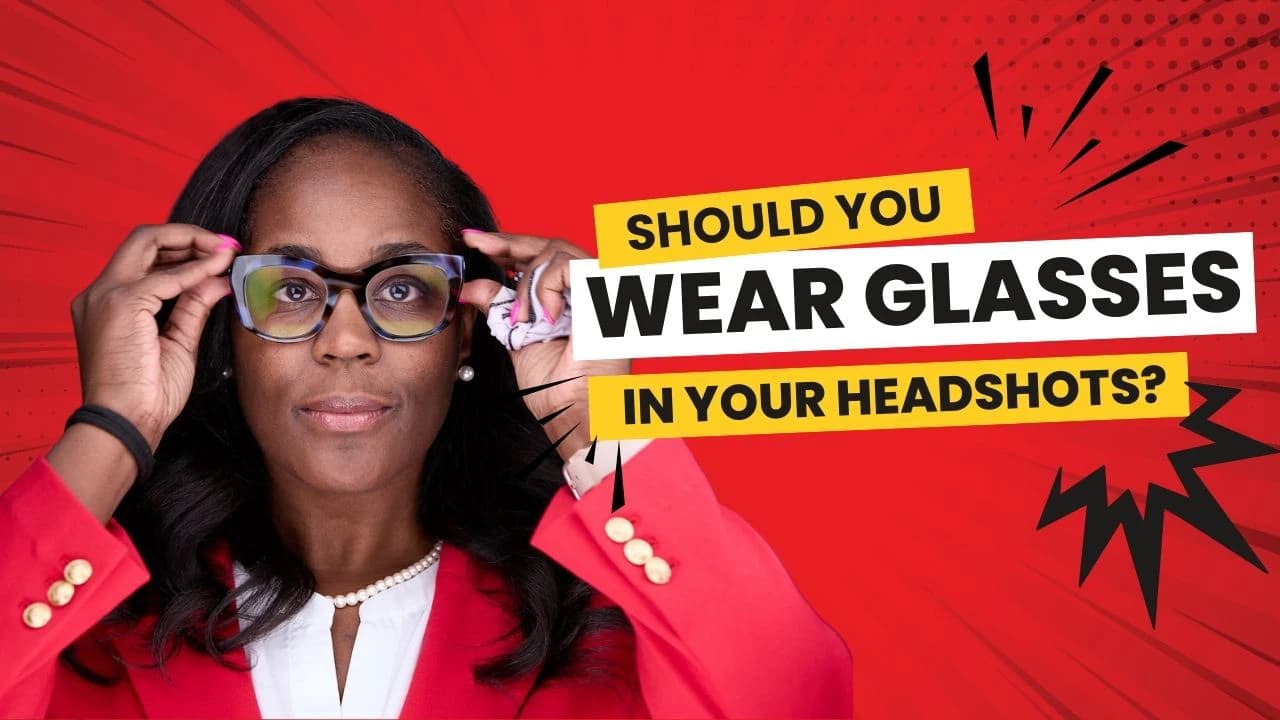
Glasses. Wear them if you wear them daily - your headshot should look like the person who shows up to the meeting. The one thing to manage is glare; anti-reflective lenses help, and we can adjust angles and lighting to keep reflections off the glass. If you can borrow an empty frame from your optician for the shoot, that eliminates glare entirely, but it's optional. Either way, always bring at least two pairs of glasses to the session, so we have a backup if one keeps catching reflections. Whether to wear glasses at all comes up often enough that we wrote a full guide to wearing glasses in headshots.
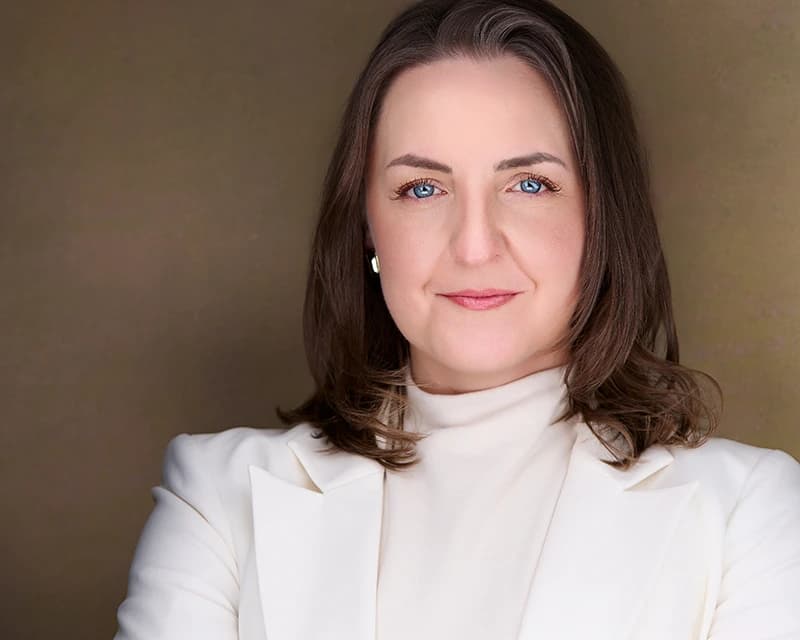
Jewelry. Less is more. Simple studs, a modest necklace, or a single meaningful piece adds polish. Big, dangling, or highly reflective jewelry pulls focus and dates quickly. If a piece is part of your signature look, keep it - just make sure it complements your face rather than competing with it.
Accessories. Scarves, pocket squares, and statement pieces are fine in moderation and can add personality, especially for creative fields. The test is always the same: does it support your face, or distract from it?
How Many Outfits Should You Bring?
Bring 3 to 5 complete outfits, on hangers, ready to go - and when in doubt, bring more. It's always better to have options we don't get to than to wish we had one more. Here's a simple way to build the set:
- A safe neutral - navy, charcoal, gray, or black, the look you can use anywhere.
- One or two with personality - a color you love, a jacket with character, a different neckline.
- A bold wildcard - one bright color or a fun pattern that brings energy and variety to the gallery.
- A casual look (or two) - a well-fitted knit, a quality tee, or a leather jacket for a relaxed, approachable option.
Don't stop at the boardroom look. The casual and personality outfits are where we get the extra images that make your session worth it - different frames for team pages, social, personal branding, and secondary shots, and often the most fun photos of the day. If you'd like full-length or three-quarter frames too, bring the outfit head to toe.
Variety gives you a gallery you can actually use across LinkedIn, speaker bios, internal directories, and press - each of those placements often wants a slightly different feel. It also lets us see what genuinely works under the lights before you commit, because clothing behaves differently on camera than in the mirror. Every session with Chad Isaiah Studios includes wardrobe changes for exactly this reason, so bring options and we'll build the strongest set together.
What NOT to Wear
A quick reference for what to leave in the closet:
- True neon - it casts a colored glow onto your skin. (A bright, bold color is welcome - it's specifically neon to skip.)
- Tight stripes, small checks, fine herringbone - the moire shimmer is distracting and hard to fix.
- Big logos and slogans - they date the photo and compete for attention.
- Anything baggy or oversized - the tight crop makes extra fabric obvious.
- Shiny, synthetic sheen - it catches studio light and creates hot spots.
- Wrinkled or fresh-out-of-the-bag clothing - press everything the night before.
- Anything that doesn't fit or feel like you - new is fine, but if you're tugging at it or second-guessing it, that tension shows on your face.
You don't need a whole new wardrobe - but dressing for the part you want is fair game. What photographs best is confidence, so lead with pieces you already feel good in. That said, plenty of clients deliberately buy something that fits the role or the level they're aiming for - sometimes keeping the tags on to return it afterward - because dressing for the part you want is a smart, valid move. The only thing to avoid is showing up in something that doesn't fit right or doesn't feel like you; that hesitation is what reads on camera, not the price tag.
A Pittsburgh & Seasonal Note
A few years of photographing Pittsburgh teams surfaces some local patterns. Healthcare clients (UPMC, AHN, Highmark) tend toward soft blues and cool neutrals; finance and professional services (PNC, BNY Mellon, regional firms) default to navy and charcoal; tech and creative folks in the Strip District, Lawrenceville, and the North Shore have more room to play with color and texture. None of these are rules - just starting points if you're unsure.
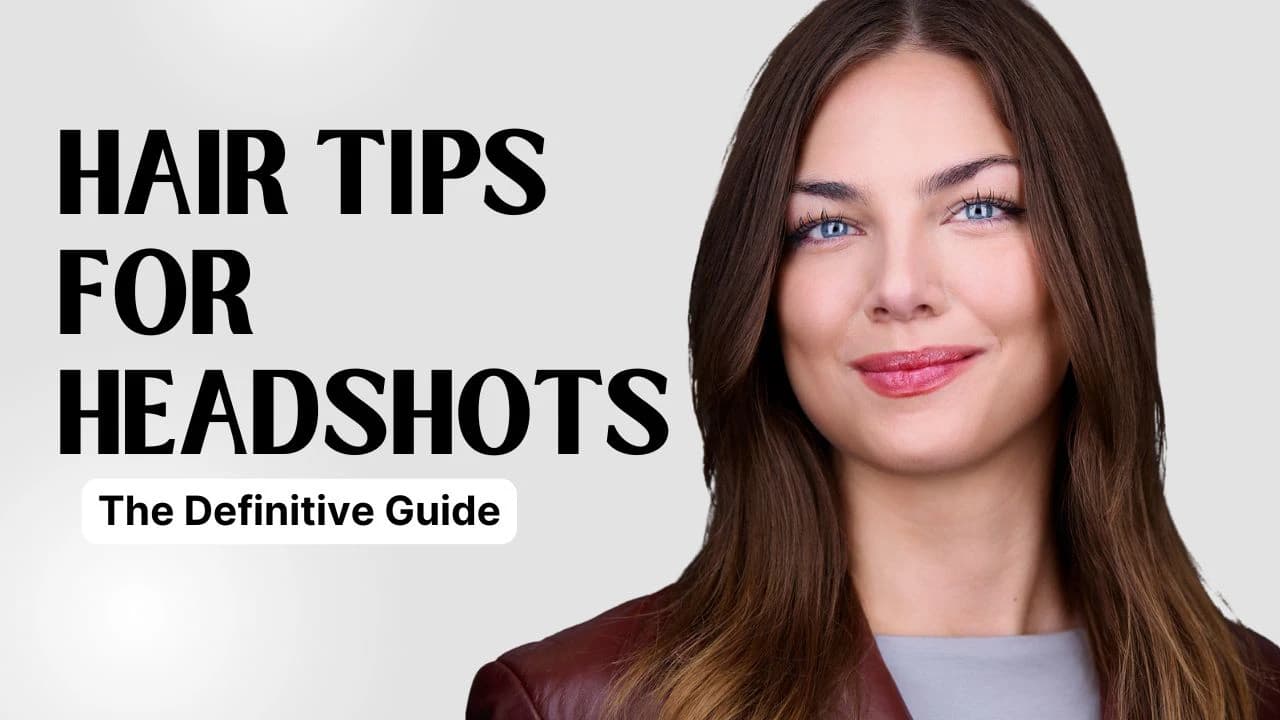
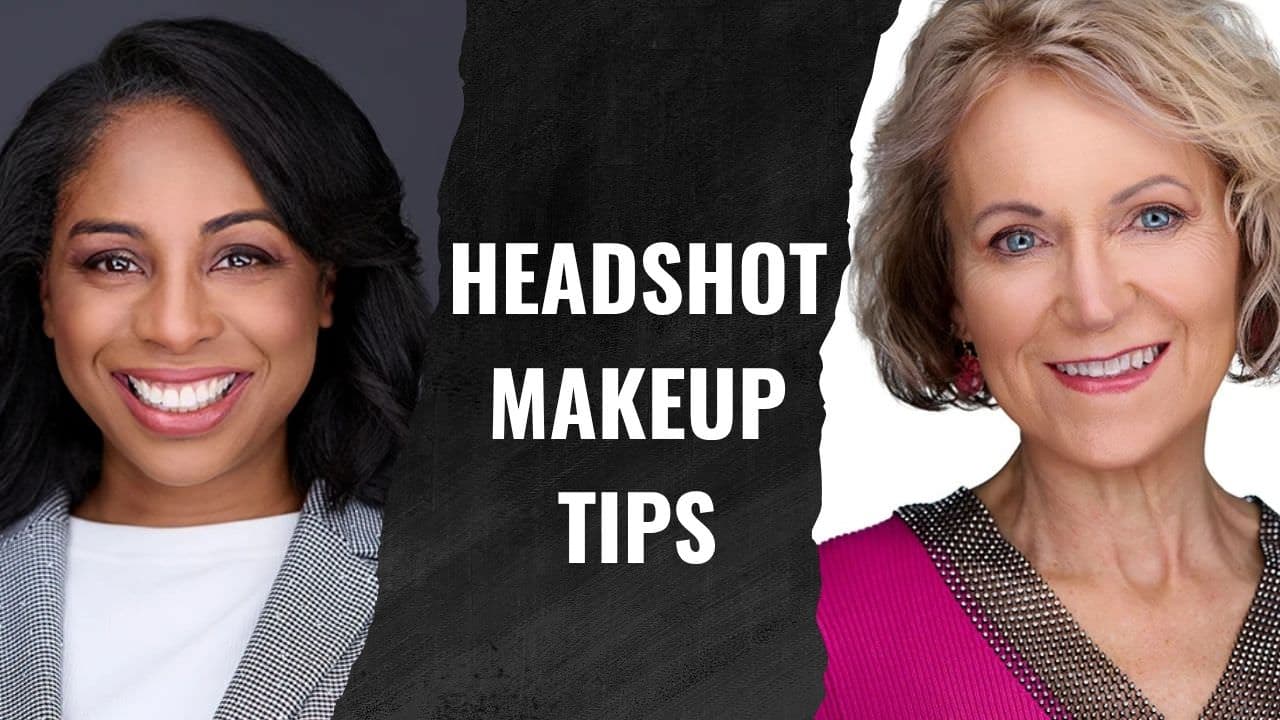
Season matters a little, too. Most of our headshots are shot in-studio on a clean, solid backdrop, so the weather outside rarely changes your outfit - outdoor headshots are available on request, though we prefer the studio and a solid backdrop for headshot work - if you're set on one, tell your photographer early. If you are shooting outdoors, with us or anyone else, dress for the setting: earth tones photograph beautifully against green and brick, but avoid wearing green at somewhere like Frick Park in summer or you'll blend into the foliage, and in winter lean on structured layers and richer tones that read well against bare trees and gray skies. Whatever the season, your outfit is one piece of the bigger picture - our guides on the best backgrounds for headshots, makeup tips, hair prep, and how to prepare for your session cover the rest of the day.
Get the fit right, keep the colors simple, add a good layer, and bring options. Do that, and you'll walk out with headshots that look like the best, most put-together version of you - which is the whole point.